Enzyme Trial Order Supplier for R&D: Sample, Test, Validate
Order enzyme samples for R&D, testing, and pilot scale with dosage, pH, temperature guidance, COA/TDS/SDS review, and cost-in-use validation.
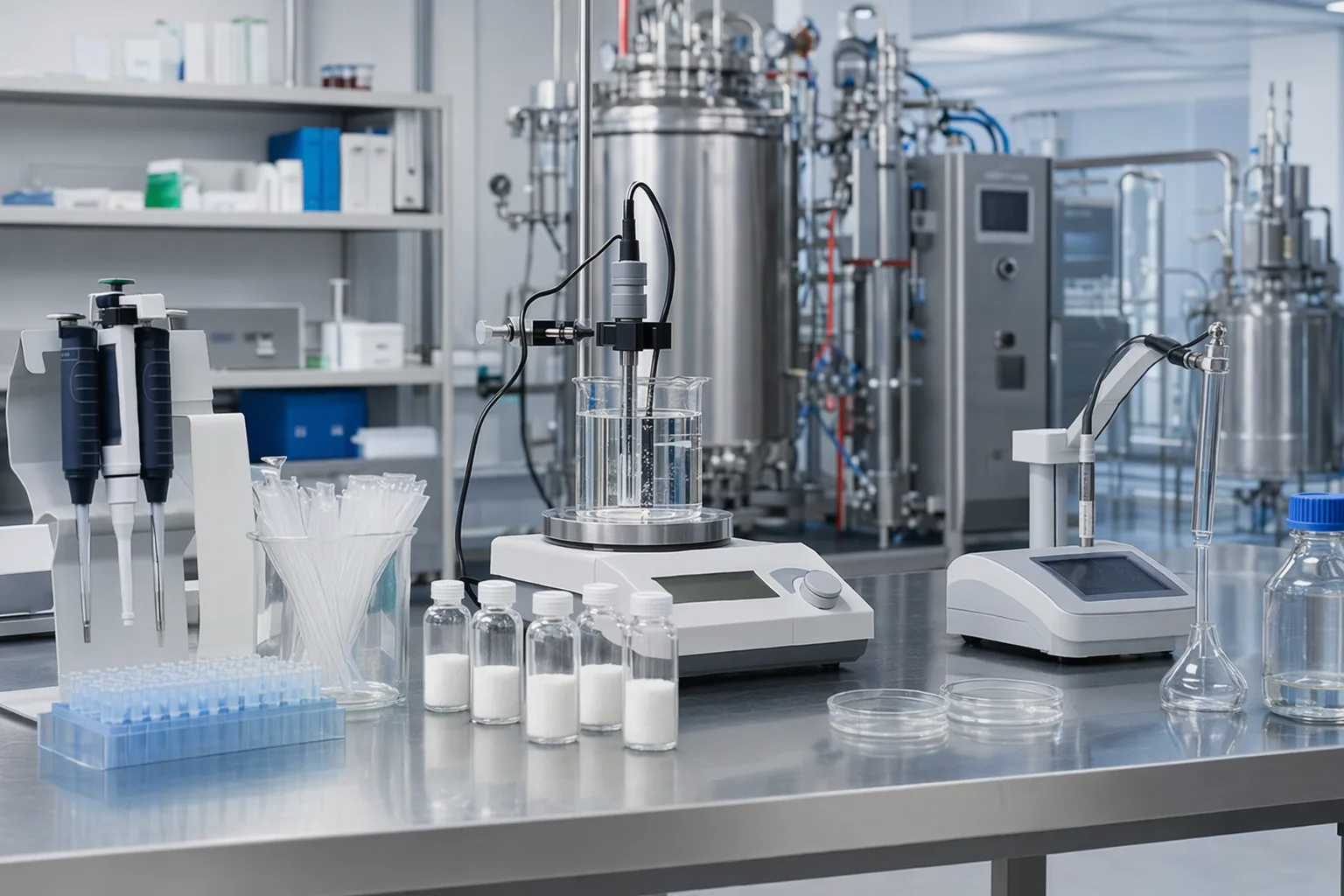
EnzymeCollect helps B2B teams source small quantity enzyme samples for controlled R&D trials, troubleshooting, and pilot-scale validation before committing to production volumes.
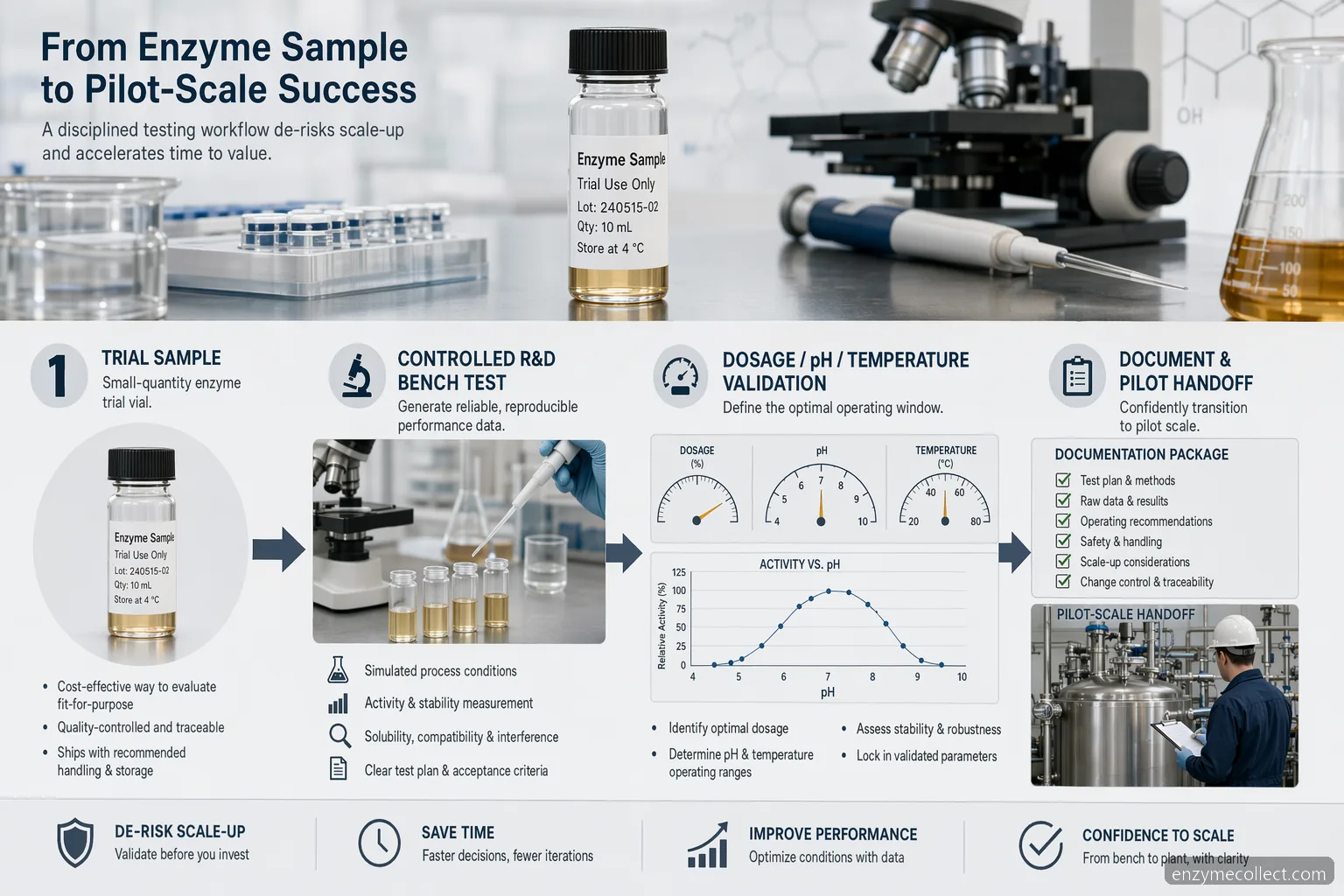
Why R&D Teams Need Trial Orders Before Bulk Enzyme Buying
An enzyme trial order supplier for r&d should do more than ship a small bottle. Industrial enzymes are process-sensitive materials, and their performance depends on substrate, water activity, pH, temperature, residence time, inhibitors, and mixing. A sample that performs well in a brochure condition may underperform in your real formulation or unit operation. For R&D buyers, small quantity enzymes reduce purchasing risk by allowing bench screening, troubleshooting, and early cost-in-use modeling before commercial commitment. EnzymeCollect supports enzyme samples for R&D, testing, and pilot scale so teams can compare activity under controlled conditions and document results. Typical first-pass screening may include 0.01–1.0% w/w dosage, pH 4.0–9.0 depending on enzyme class, and 25–65°C temperature windows where technically appropriate. The goal is not maximum activity in isolation; it is repeatable performance in your process.
Use small trial orders to compare multiple enzyme types or activity strengths. • Screen against real substrates, not only model compounds. • Capture performance, stability, handling, and cost-in-use data together.
Set the Right Dosage, pH, and Temperature Window
Industrial enzyme trial order r&d work should start with a defined design of experiment. Establish a control, then test two or three dosage levels around a practical starting point. For many liquid processing trials, teams begin around 0.05–0.5% w/w or 50–500 ppm active preparation, then adjust based on conversion, viscosity, filtration rate, cleaning score, or yield. pH should be measured in the actual matrix because buffers, salts, proteins, surfactants, and acids can shift effective enzyme behavior. Temperature should reflect both enzyme activity and process constraints; common screening ranges include 30–55°C for moderate thermal processes and up to 60–70°C only when the enzyme type and TDS support it. Avoid assuming higher dosage always improves economics. After the reaction reaches a plateau, additional enzyme may add cost without measurable benefit.
Always run a no-enzyme control and, when possible, a heat-inactivated control. • Record pH before dosing, during reaction, and after completion. • Track reaction time because many enzymes show diminishing returns after a defined endpoint.
Documentation to Request With Every Enzyme Sample
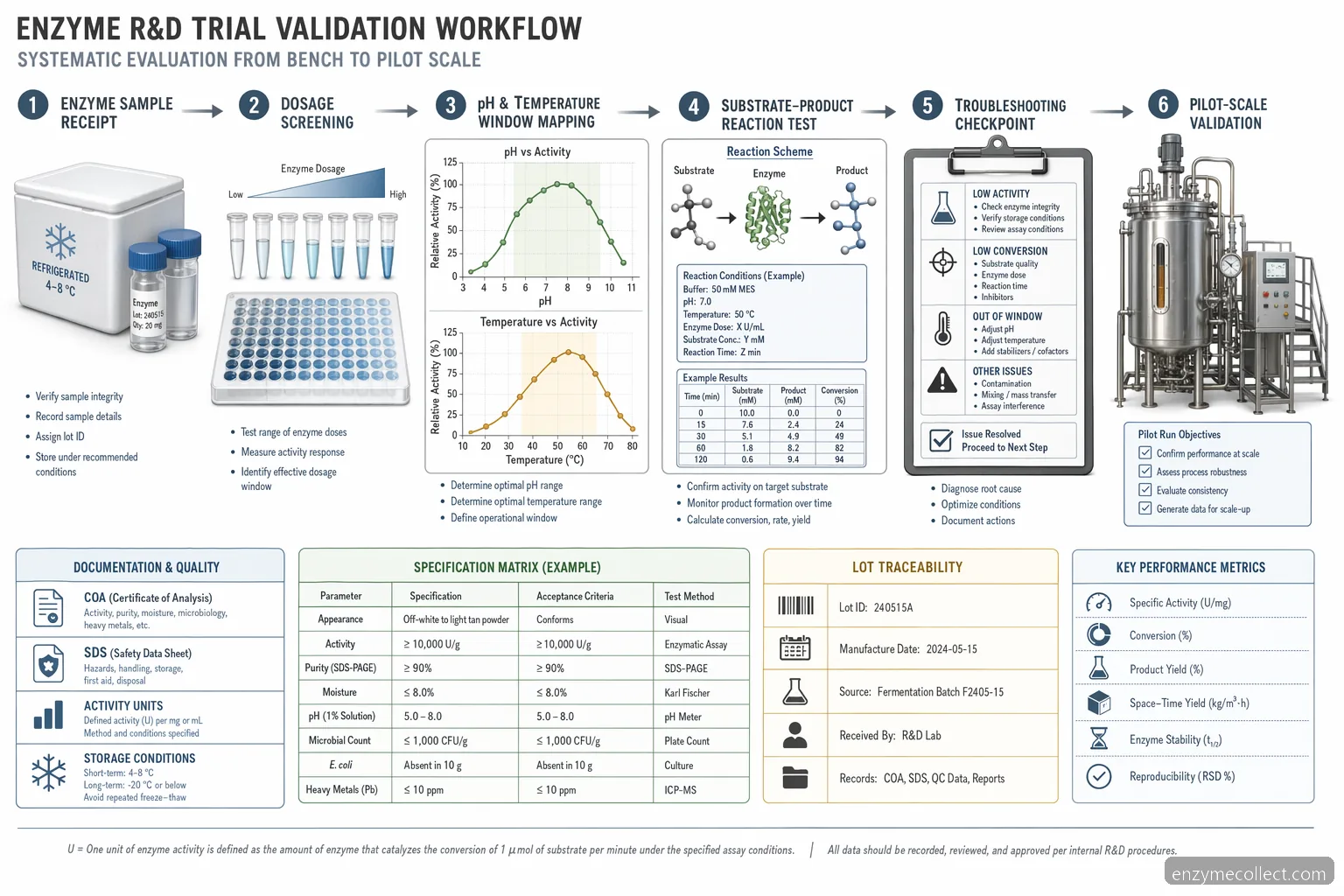
A qualified enzyme trial order supplier for testing should provide documentation that lets procurement, R&D, EHS, and production evaluate the sample consistently. Ask for a Certificate of Analysis to confirm lot identity, activity method, appearance, and basic quality checks. Review the Technical Data Sheet for recommended pH range, temperature range, dosage guidance, storage, shelf life, and compatibility notes. Request the Safety Data Sheet for safe handling, personal protective equipment guidance, spill response, and transport classification where applicable. Documentation quality is part of supplier qualification because it shows whether the supplier can support repeatable trials and future scale-up. If your process is regulated or customer-audited, keep sample labels, lot numbers, receipt dates, storage temperatures, and test records together. A trial order is small, but the data trail should be production-minded.
Request COA, TDS, and SDS before or with shipment. • Confirm activity units and test method, not just product name. • Log storage conditions and lot numbers during internal evaluation.
Bench Testing and Troubleshooting Workflow
Industrial enzyme trial order testing is most useful when the workflow isolates one variable at a time. Begin with a baseline process map: substrate concentration, batch size, agitation, pH adjustment method, hold temperature, contact time, and downstream separation. Run a small matrix that changes dosage, pH, and temperature while keeping sampling time consistent. If performance is weak, check common failure points before rejecting the enzyme: incorrect pH, high temperature exposure before dosing, oxidizers or preservatives in the matrix, insufficient mixing, too short a contact time, or an endpoint method that does not match the enzyme function. For example, a viscosity-reducing enzyme should be judged by flow, filtration, or viscosity data, not only by visual change. EnzymeCollect can help buyers frame trial quantities around realistic sample consumption, repeat runs, and retained material for confirmation.
Use duplicate or triplicate tests when decisions affect purchasing or scale-up. • Match the analytical endpoint to the intended process benefit. • Keep a retained sample for repeatability checks if the first screen is promising.
Moving From R&D to Pilot Scale Without Losing Control
An enzyme trial order supplier for pilot scale should help bridge bench success to practical operation. Pilot validation confirms whether lab performance survives larger batch volumes, slower heat transfer, different shear, real equipment surfaces, and downstream constraints. Before pilot work, define pass/fail criteria such as percent conversion, filtration time, yield improvement, cleaning time, reduced rework, or acceptable sensory and material compatibility outcomes where relevant. Pilot dosage often starts from the best bench condition, then tests a narrow band around it to confirm robustness. Track cost-in-use by calculating enzyme cost per tonne of substrate, per batch, or per unit of output rather than cost per kilogram of enzyme alone. Supplier qualification should include ability to provide repeat lots, consistent documentation, realistic lead times, and technical communication for troubleshooting during scale-up.
Validate the selected dosage under real mixing, heating, and holding conditions. • Compare performance benefit against total enzyme cost-in-use. • Confirm supply continuity before moving from pilot to production planning.
Technical Buying Checklist
Buyer Questions
The right enzyme trial order for r&d depends on batch size, dosage range, number of repeats, and whether you need retained material. Many bench programs need enough sample for controls, two or three dosage levels, duplicate runs, and confirmation testing. Share your substrate amount, target dosage band, and pilot plans so the trial quantity supports meaningful data rather than a single one-off test.
For B2B industrial evaluation, request a COA, TDS, and SDS. The COA should identify the lot and activity or quality checks. The TDS should outline recommended pH, temperature, dosage, storage, and application guidance. The SDS supports safe handling, PPE decisions, storage, and spill response. These documents also help procurement and quality teams compare suppliers during qualification.
First confirm that pH, temperature, dosage, and contact time match the enzyme’s documented operating range. Then check for inhibitors such as oxidizers, preservatives, solvents, heavy metals, or extreme salt levels. Review mixing, substrate accessibility, and sampling method. If the endpoint is not aligned with the enzyme’s function, results may look weak even when the enzyme is active. Repeat with controls before rejecting the sample.
Move to pilot scale after bench testing shows repeatable performance, a practical dosage band, and a measurable process benefit. Pilot validation should test the enzyme under real equipment conditions, including heating, mixing, hold time, and downstream separation. Define pass/fail criteria before the run and calculate cost-in-use per batch, tonne, or finished output so the scale-up decision is commercial as well as technical.
Alpha-Galactosidase for Research & Industry
Need Alpha-Galactosidase for your lab or production process?
ISO 9001 certified · Food-grade & research-grade · Ships to 80+ countries
Frequently Asked Questions
How much enzyme should we order for an R&D trial?
The right enzyme trial order for r&d depends on batch size, dosage range, number of repeats, and whether you need retained material. Many bench programs need enough sample for controls, two or three dosage levels, duplicate runs, and confirmation testing. Share your substrate amount, target dosage band, and pilot plans so the trial quantity supports meaningful data rather than a single one-off test.
What documents should come with enzyme samples?
For B2B industrial evaluation, request a COA, TDS, and SDS. The COA should identify the lot and activity or quality checks. The TDS should outline recommended pH, temperature, dosage, storage, and application guidance. The SDS supports safe handling, PPE decisions, storage, and spill response. These documents also help procurement and quality teams compare suppliers during qualification.
How do we troubleshoot poor enzyme performance in testing?
First confirm that pH, temperature, dosage, and contact time match the enzyme’s documented operating range. Then check for inhibitors such as oxidizers, preservatives, solvents, heavy metals, or extreme salt levels. Review mixing, substrate accessibility, and sampling method. If the endpoint is not aligned with the enzyme’s function, results may look weak even when the enzyme is active. Repeat with controls before rejecting the sample.
When should an enzyme trial move to pilot scale?
Move to pilot scale after bench testing shows repeatable performance, a practical dosage band, and a measurable process benefit. Pilot validation should test the enzyme under real equipment conditions, including heating, mixing, hold time, and downstream separation. Define pass/fail criteria before the run and calculate cost-in-use per batch, tonne, or finished output so the scale-up decision is commercial as well as technical.
Ready to source?
Turn This Guide Into a Supplier Brief Request an enzyme trial order for R&D, testing, or pilot scale with COA, TDS, SDS, and process-condition guidance.
Contact Us to Contribute