Enzyme Samples Supplier for Testing: Process Guide
Source enzyme samples for testing, R&D, and pilot scale with COA/TDS/SDS review, trial dosing, QC checks, and supplier qualification steps.
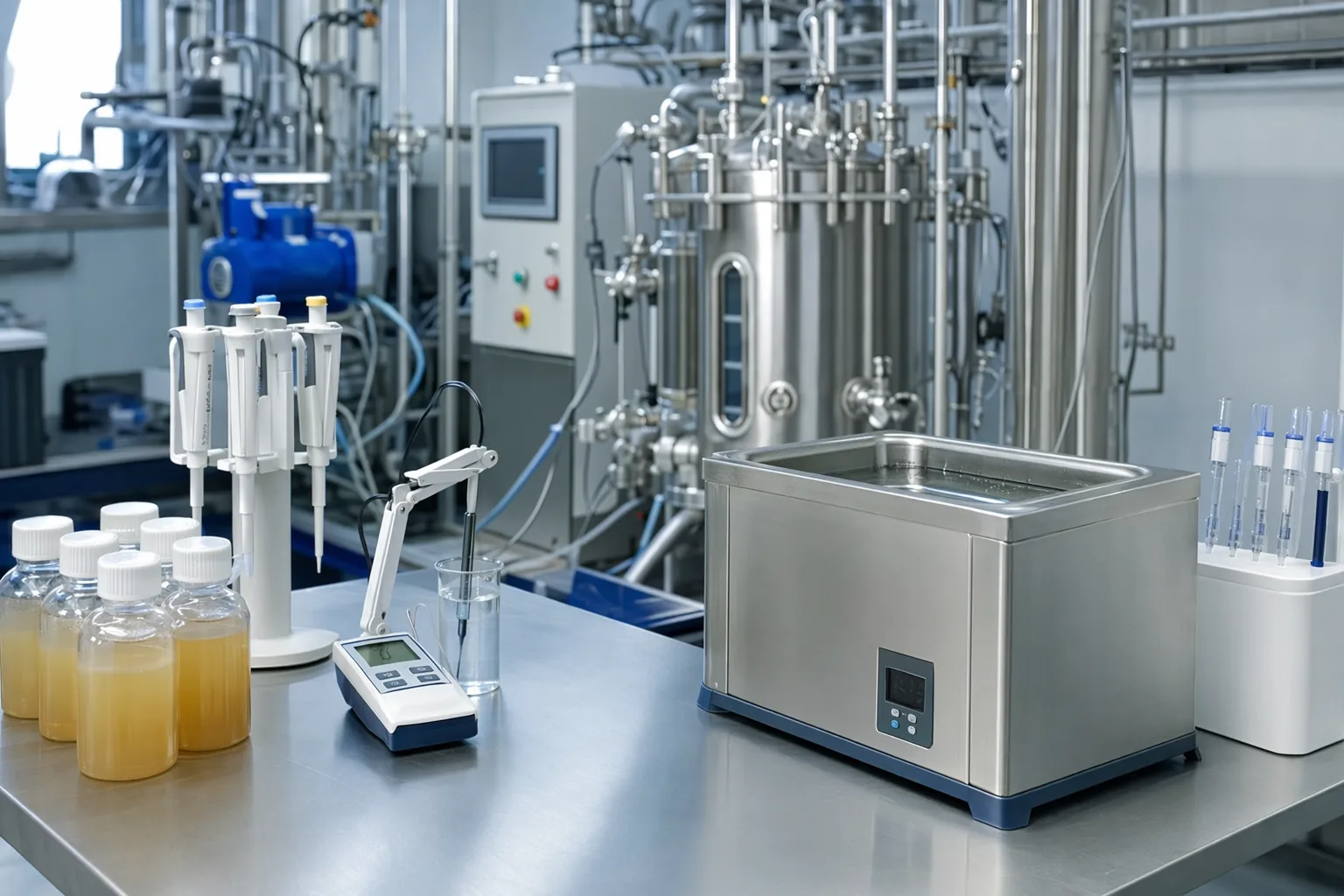
A practical B2B guide for sourcing small quantity industrial enzyme samples, running structured lab trials, and moving qualified candidates toward pilot-scale validation.
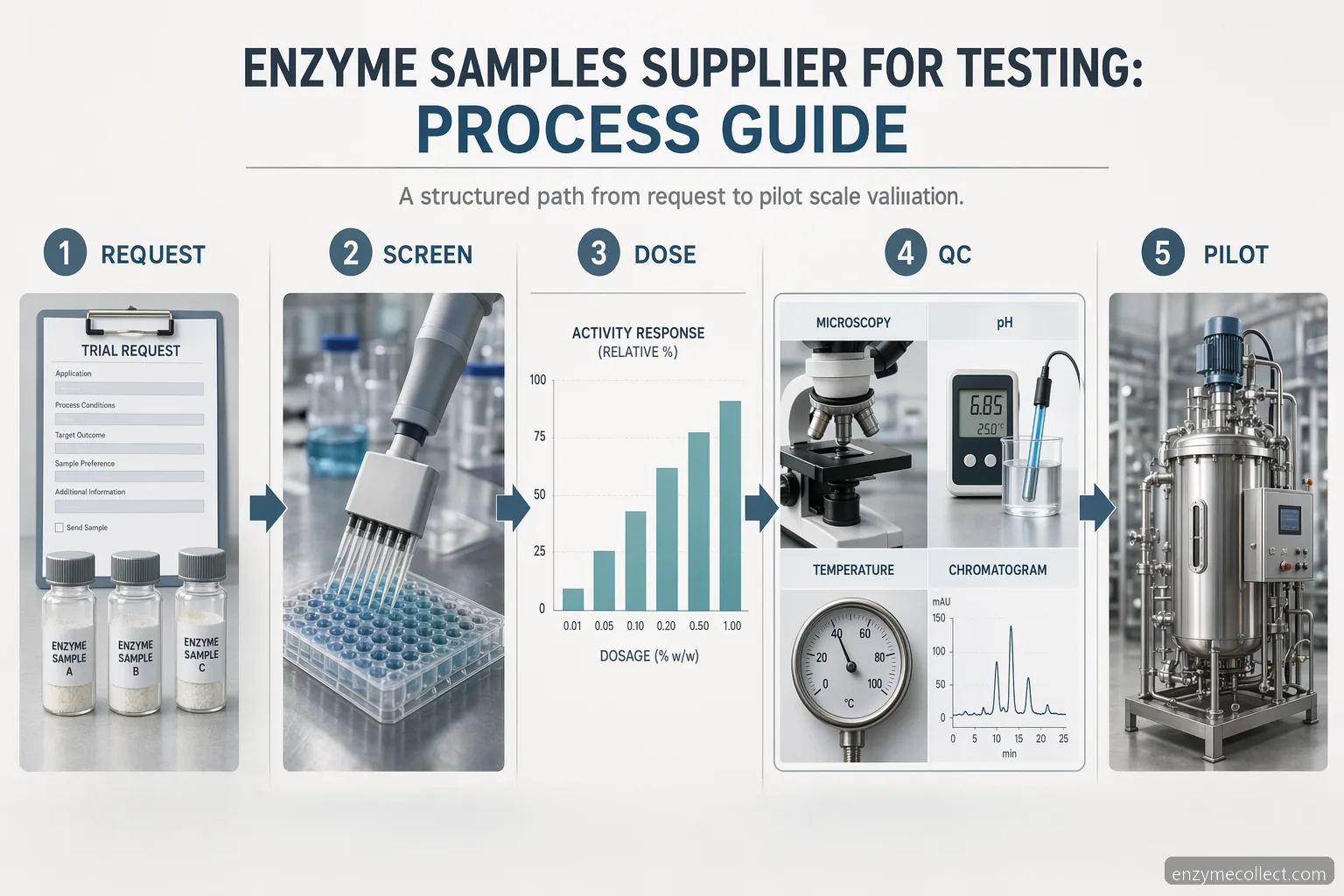
Why structured enzyme sample testing matters
Industrial enzyme selection is rarely solved by activity value alone. A useful enzyme samples supplier for testing should support controlled screening across the conditions that matter in production: substrate type, solids level, pH, temperature, residence time, inhibitors, and downstream compatibility. For R&D, small quantity enzymes help compare chemistries before committing to drums or totes. For pilot scale, samples help confirm that lab results translate into process equipment, mixing conditions, and real raw material variability. Buyers should separate marketing data from testable requirements by requesting a technical data sheet, certificate of analysis, safety data sheet, recommended dosage range, and storage guidance. This approach reduces wasted trials and makes internal reporting easier for procurement, process engineering, and quality teams. The goal is not to find the highest activity number on paper; it is to identify an enzyme that delivers repeatable process value under your operating window.
Use real process samples when possible. • Document starting pH, temperature, and substrate concentration. • Run controls without enzyme for comparison. • Track both performance and handling constraints.
How to request an enzyme trial order
An enzyme trial order supplier for testing should ask enough questions to recommend a relevant sample size and formulation. Typical lab trials may require 100 g to 1 kg, while pilot trials may require 5 kg to 25 kg depending on dosage, batch volume, and number of test points. When requesting enzyme samples for testing, share the application, substrate, target result, current process conditions, cleaning limits, and whether the enzyme must be liquid, granulated, immobilized, or powder. Include the intended pH range, temperature range, contact time, and any preservatives, surfactants, salts, solvents, or heat steps present in the process. This information helps avoid unsuitable candidates and improves the quality of technical recommendations. For regulated or export-controlled destinations, clarify shipping documents, product classification, and import requirements early, because delays can compromise cold-chain or storage-sensitive materials.
State lab, pilot, or pre-production trial volume. • Ask for activity units and the test method used. • Confirm shelf life and storage temperature. • Request lot number traceability on the sample.
Recommended trial conditions and dosage bands
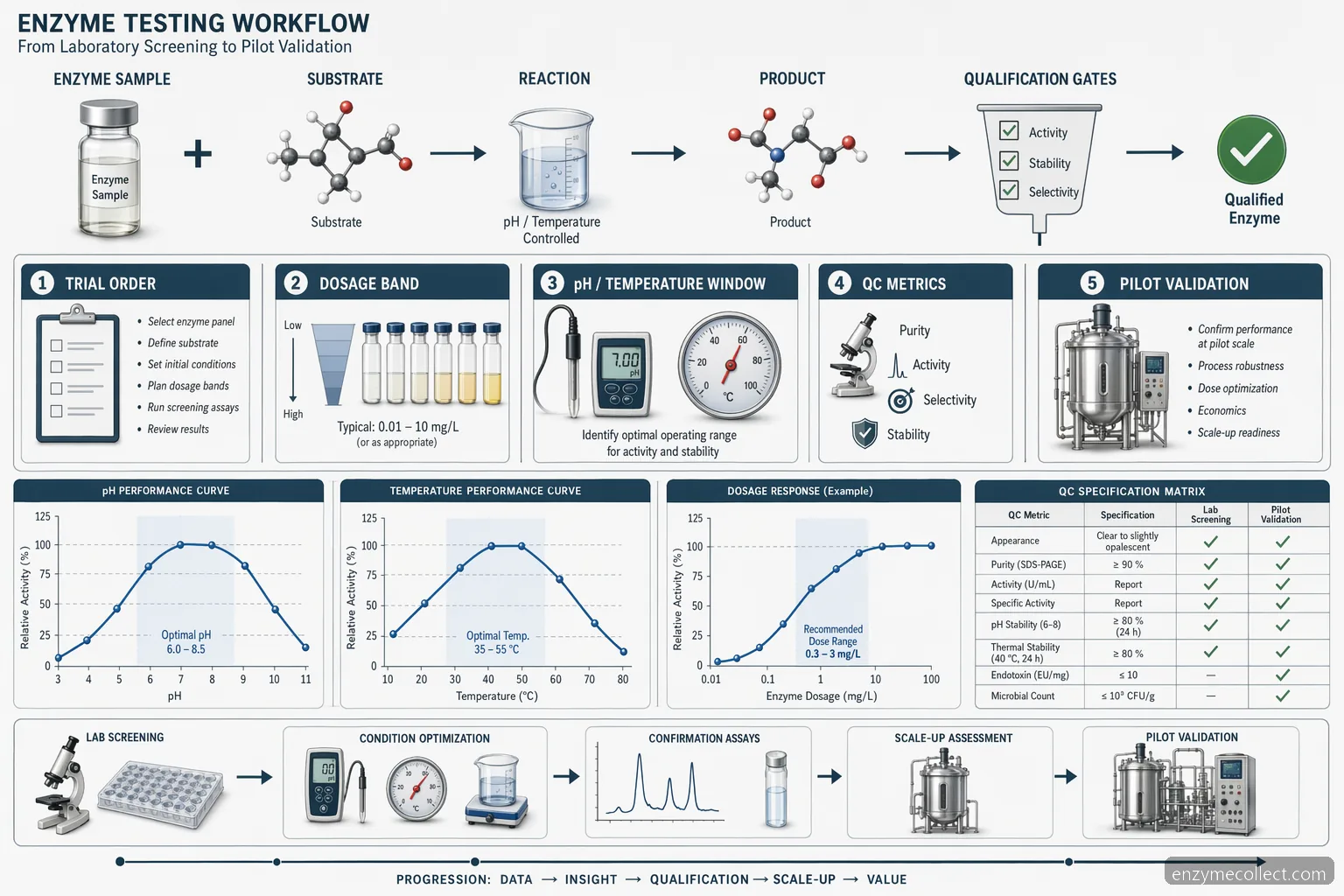
Most industrial enzyme samples testing should begin with a defined matrix of pH, temperature, dosage, and time. For many carbohydrases, initial screening may cover pH 4.0 to 7.0 and 40 to 65°C, while many proteases may be screened across pH 6.0 to 10.5 and 35 to 60°C. Lipases often require attention to emulsification, water activity, and substrate interface, so agitation and surfactant compatibility should be kept consistent. A practical first dosage band is often 0.01% to 0.20% w/w enzyme product on substrate or 50 to 1000 ppm in the reaction medium, followed by narrower optimization around the best result. These are starting points, not universal rules. Always follow the supplier TDS and adapt the plan to your process constraints, because enzyme stability and activity can change significantly with salts, metal ions, solvents, oxidants, and shear.
Use at least three dosage levels plus a blank control. • Hold mixing speed constant across samples. • Measure performance at fixed time intervals. • Stop reactions consistently by heat, pH shift, or validated method.
QC checks for comparing enzyme candidates
A reliable enzyme testing supplier for R&D should help define quality checks that match the intended application. Depending on the process, useful measurements may include viscosity reduction, sugar release, degree of hydrolysis, protein solubilization, fat conversion, color change, turbidity, filtration rate, yield improvement, or reduction in processing time. Basic QC should also include appearance, odor, pH of the supplied product, activity value, microbiological limits when relevant, and conformity to the COA. During testing, duplicate or triplicate runs improve confidence, especially when raw materials vary by season or supplier. Keep sample storage consistent, because repeated warming, freezing, or moisture exposure can distort results. If two enzymes perform similarly, compare robustness under slightly stressed conditions such as pH drift, lower temperature, shorter residence time, or higher solids. This helps identify the candidate most likely to survive real production variation.
Record lot number and opening date. • Compare against a no-enzyme control and current benchmark. • Use the same analytical method for all candidates. • Retain trial samples when internal review requires confirmation.
From lab screening to pilot validation
An enzyme testing supplier for pilot scale should support the transition from bench data to larger equipment without overstating performance. Pilot validation should test mixing, heat transfer, dosing sequence, addition point, hold time, and downstream effects such as filtration, separation, drying, cleaning, or wastewater load. A common approach is to select one or two leading candidates from lab screening, then run pilot batches at the expected production dosage plus one lower and one higher level. Cost-in-use should be calculated from effective dosage, activity stability, freight, storage, waste reduction, yield impact, and any required process changes. Procurement should also assess supplier qualification: documentation responsiveness, COA/TDS/SDS completeness, batch traceability, change notification practices, packaging options, lead time, and ability to supply commercial volumes. Pilot success is not only a technical result; it is a supply decision that must be repeatable and auditable.
Confirm the scale-up dosing method before the pilot run. • Check whether enzyme deactivation is required downstream. • Include operators, QA, and procurement in the review. • Compare total process economics, not only enzyme price.
Technical Buying Checklist
Buyer Questions
Share the application, substrate, process pH, temperature, contact time, target result, trial scale, and any inhibitors or additives present. Also state whether you need liquid, powder, granule, or immobilized format. A qualified enzyme samples supplier for R&D or testing can then recommend a relevant candidate, sample quantity, storage condition, and starting dosage range.
For early screening, 100 g to 1 kg is often enough, depending on dosage and the number of test points. If you plan duplicates, several pH and temperature conditions, or larger substrate batches, request more. Pilot-scale work may require 5 kg to 25 kg or more, especially when confirming dosing, mixing, and process economics.
At minimum, request a COA, TDS, and SDS. The COA should identify the lot and key quality data. The TDS should include activity, recommended operating conditions, storage, and dosage guidance. The SDS supports safe handling and internal review. For supplier qualification, also ask about traceability, shelf life, packaging, and change notification practices.
Use the same substrate, batch size, pH, temperature, mixing speed, contact time, and analytical method for each candidate. Include a no-enzyme control and, if available, your current benchmark enzyme. Test at several dosage levels, then compare performance, robustness, handling, and cost-in-use. Avoid judging only by activity units because methods differ between products.
Move to pilot scale after a candidate shows repeatable improvement in lab trials and fits your handling, safety, and documentation needs. Pilot validation should confirm performance under realistic mixing, heating, dosing, residence time, and downstream conditions. It should also test cost-in-use and verify whether the supplier can support commercial volume, lead time, and batch traceability.
Alpha-Galactosidase for Research & Industry
Need Alpha-Galactosidase for your lab or production process?
ISO 9001 certified · Food-grade & research-grade · Ships to 80+ countries
Frequently Asked Questions
What should I provide when requesting enzyme samples for testing?
Share the application, substrate, process pH, temperature, contact time, target result, trial scale, and any inhibitors or additives present. Also state whether you need liquid, powder, granule, or immobilized format. A qualified enzyme samples supplier for R&D or testing can then recommend a relevant candidate, sample quantity, storage condition, and starting dosage range.
How much enzyme is needed for a lab trial?
For early screening, 100 g to 1 kg is often enough, depending on dosage and the number of test points. If you plan duplicates, several pH and temperature conditions, or larger substrate batches, request more. Pilot-scale work may require 5 kg to 25 kg or more, especially when confirming dosing, mixing, and process economics.
Which documents should come with industrial enzyme samples?
At minimum, request a COA, TDS, and SDS. The COA should identify the lot and key quality data. The TDS should include activity, recommended operating conditions, storage, and dosage guidance. The SDS supports safe handling and internal review. For supplier qualification, also ask about traceability, shelf life, packaging, and change notification practices.
How do I compare enzyme candidates fairly?
Use the same substrate, batch size, pH, temperature, mixing speed, contact time, and analytical method for each candidate. Include a no-enzyme control and, if available, your current benchmark enzyme. Test at several dosage levels, then compare performance, robustness, handling, and cost-in-use. Avoid judging only by activity units because methods differ between products.
When should a lab result move to pilot-scale validation?
Move to pilot scale after a candidate shows repeatable improvement in lab trials and fits your handling, safety, and documentation needs. Pilot validation should confirm performance under realistic mixing, heating, dosing, residence time, and downstream conditions. It should also test cost-in-use and verify whether the supplier can support commercial volume, lead time, and batch traceability.
Ready to source?
Turn This Guide Into a Supplier Brief Request enzyme samples for testing with COA, TDS, SDS, and scale-up guidance for your R&D or pilot trial.
Contact Us to Contribute