Enzyme Samples Supplier for R&D, Testing, and Pilot Scale
Source small-quantity enzyme samples for R&D, testing, and pilot validation with COA, TDS, SDS, dosage guidance, and cost-in-use support.
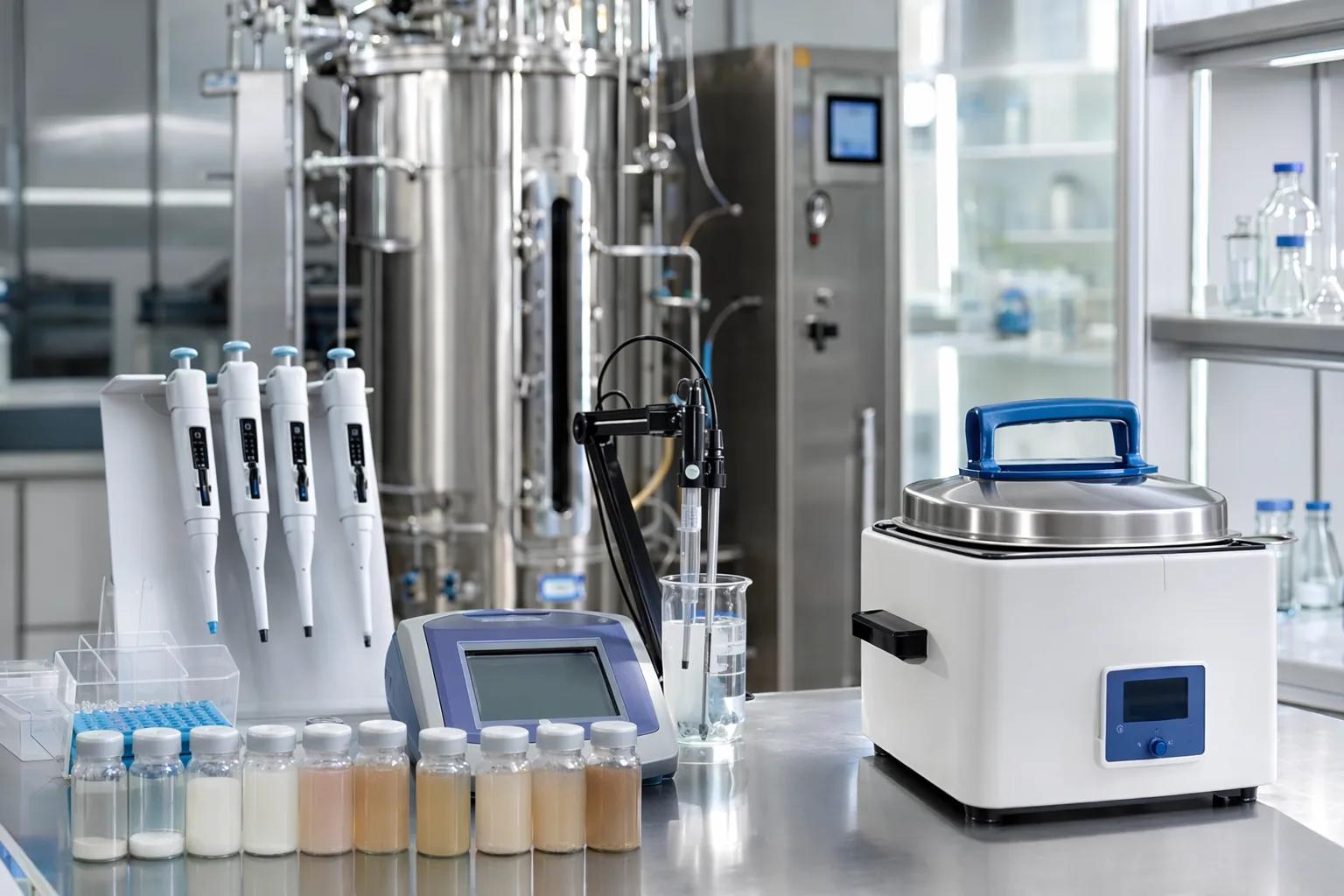
EnzymeCollect helps industrial buyers source practical enzyme samples for lab evaluation, process screening, and pilot-scale validation before committing to commercial volumes.
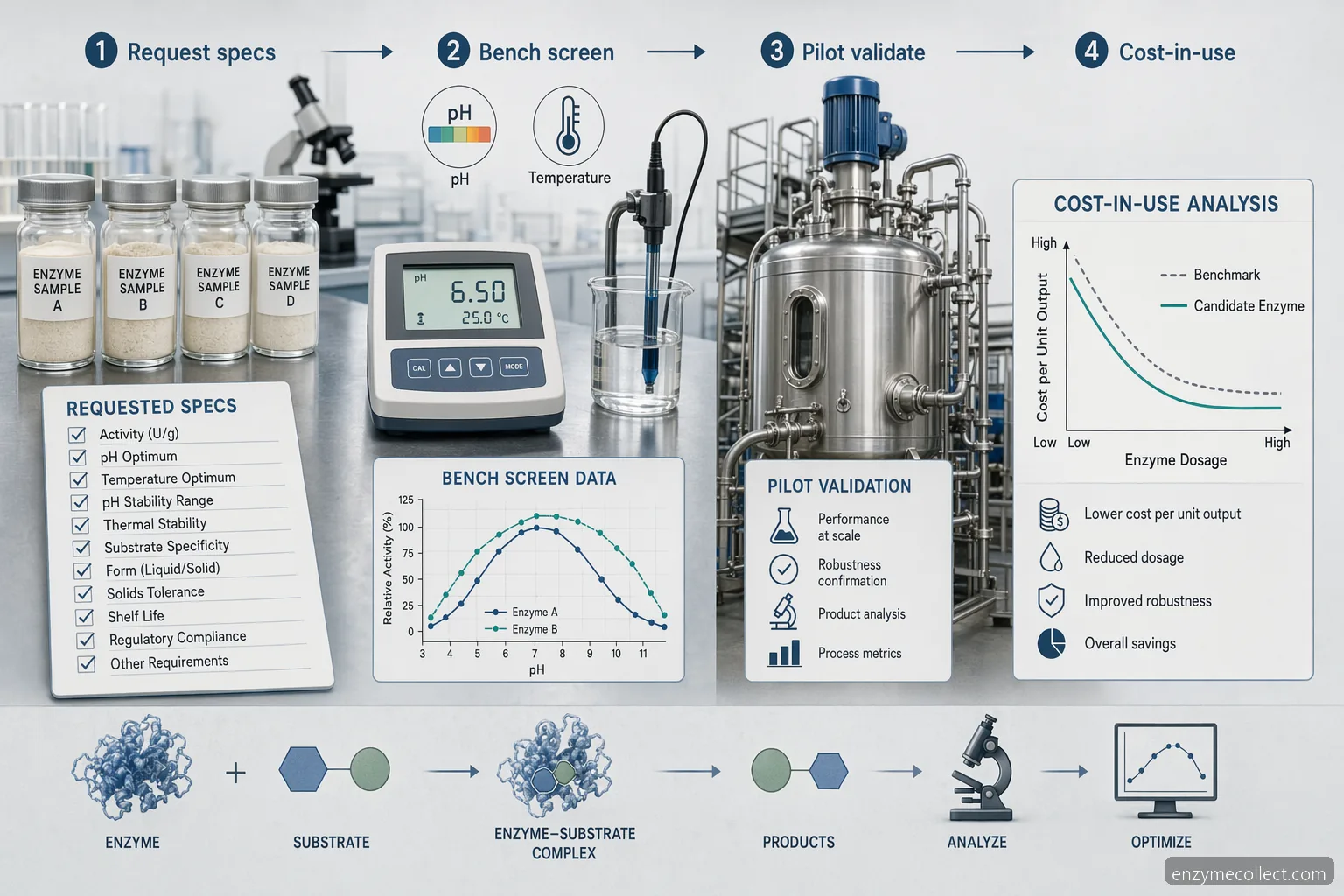
Why R&D Teams Need a Focused Enzyme Sample Supplier
Choosing an enzyme samples supplier for R&D is different from buying bulk material for routine production. Early-stage projects require small quantity enzymes, documented handling instructions, and enough technical context to run meaningful trials. EnzymeCollect supports buyers who need enzyme trial order options for screening, formulation adjustment, and process feasibility work. Typical R&D questions include whether an enzyme remains active at the process pH, whether it tolerates salts, surfactants, solvents, or shear, and whether it improves yield, viscosity, clarity, texture, release, hydrolysis, or cleaning performance. A structured sample program also helps purchasing, technical, and quality teams compare multiple enzyme classes without locking into large inventory. For industrial applications, sample selection should be linked to substrate type, target reaction, processing equipment, hold time, regulatory expectations, and downstream treatment. The goal is not just obtaining a vial; it is generating data that supports a confident scale-up decision.
Suitable for R&D, testing, formulation screening, and pilot planning • Supports small quantity enzyme requests before bulk procurement • Designed for industrial buyers, not supplement or medical use
What to Request With Every Enzyme Sample
A useful enzyme sample should arrive with documentation that allows repeatable evaluation. Ask for a Certificate of Analysis when available, a Technical Data Sheet, and a Safety Data Sheet before testing. The COA may include activity, appearance, production lot, moisture, microbial limits, or other relevant release checks depending on enzyme type and format. The TDS should explain the declared activity unit, recommended pH range, operating temperature range, substrate fit, storage conditions, and suggested dosage band. Common industrial screening conditions may include pH 4.0 to 6.5 for many carbohydrases, pH 6.0 to 9.0 for several protease or lipase applications, and temperatures from 30°C to 65°C where enzyme stability allows. Dosage can vary widely, but bench trials often begin around 0.01% to 0.5% by weight or equivalent activity units per gram of substrate, then narrow based on response.
COA for lot-specific quality data • TDS for activity, use range, and dosage starting points • SDS for safe handling, storage, and transport review • Clear sample size, concentration, and expiration details
How to Run Practical Bench Testing
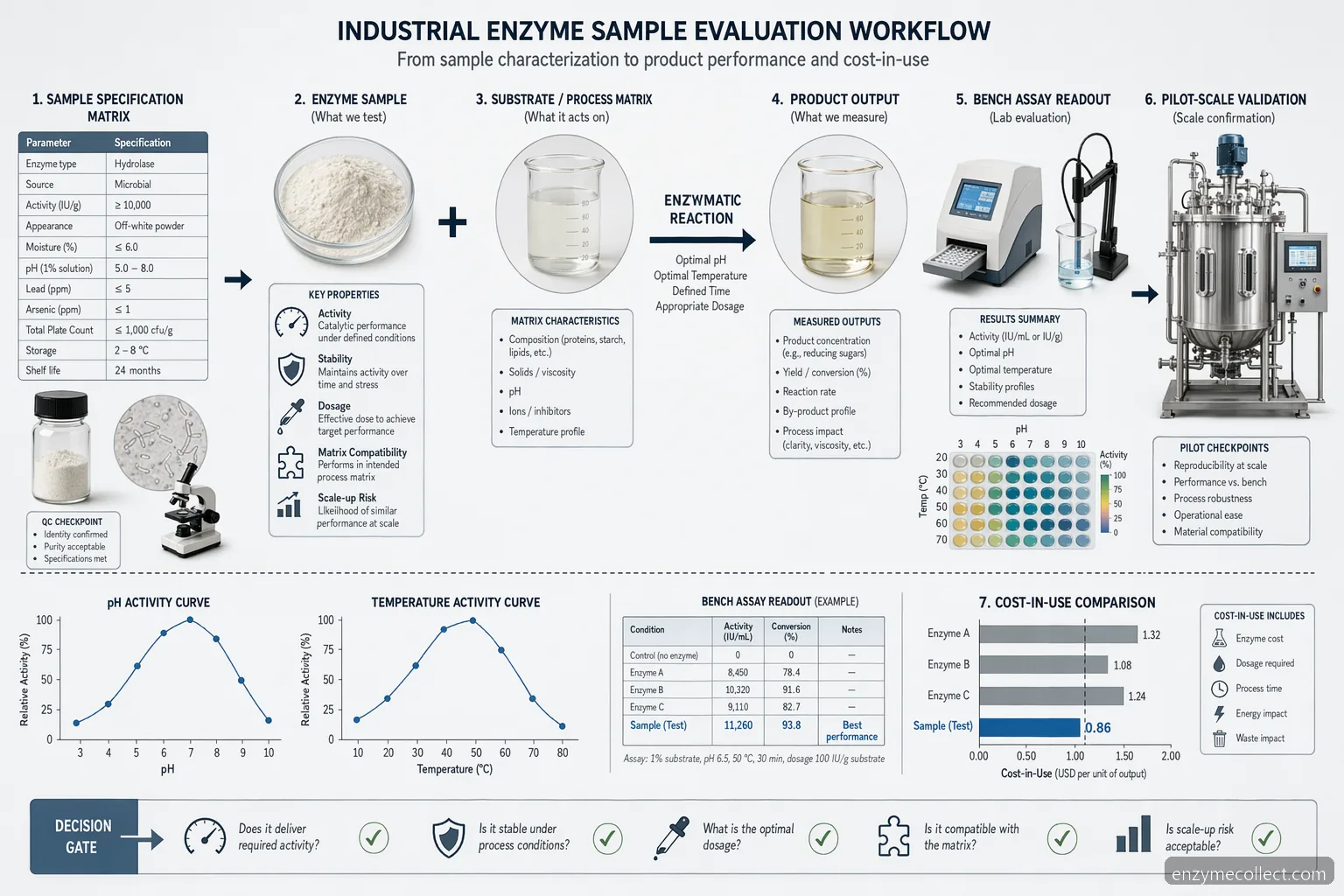
For buyers searching for an enzyme samples supplier for testing, the strongest results come from controlled, comparable protocols. Define the substrate, solids level, pH, buffer or process liquor, temperature, mixing rate, reaction time, and stop condition before opening the sample. Include a no-enzyme control and at least two dosage levels, then measure the response using relevant QC checks such as viscosity, reducing sugars, protein solubilization, oil release, turbidity, filtration rate, color, odor, particle size, or residual substrate. Keep samples at the same temperature because enzyme activity is temperature dependent; inconsistent temperatures can create false performance differences. If both samples are treated with a restriction enzyme or any other enzyme in a comparative assay, matching time, pH, dosage, and thermal history is essential. Record lot number, preparation date, dilution water, and storage conditions so promising results can be reproduced.
Use controls and duplicate samples where possible • Match pH, temperature, and contact time across candidates • Track activity-based dosage, not only liquid weight or volume • Capture QC results in a scale-up-ready format
From Lab Sample to Pilot-Scale Validation
An enzyme samples supplier for pilot scale should help translate bench data into a realistic process window. Pilot validation confirms whether the enzyme performs under actual mixing, heating, residence time, feed variability, and cleaning conditions. A lab result at 50°C and pH 6.0 may not hold if plant equipment creates hot spots, long hold times, foam, or rapid pH drift. During pilot work, test the preferred dosage band and one lower-cost dosage to calculate cost-in-use. Include measurements such as yield increase, cycle time reduction, wastewater load, filterability, energy use, rework reduction, or improved consistency. Confirm when the enzyme should be added, how it should be diluted, and how activity should be stopped if the process requires deactivation. Pilot data also supports supplier qualification by checking responsiveness, documentation quality, lead times, batch consistency, and the ability to supply commercial quantities after approval.
Validate operating window under real equipment conditions • Measure technical performance and economic impact • Confirm addition point, dilution method, and deactivation needs • Use pilot data for supplier qualification and procurement approval
Evaluating Cost-in-Use and Supplier Fit
The lowest quoted sample price rarely identifies the best industrial enzyme. Buyers should compare cost-in-use by linking enzyme dosage, activity level, conversion result, cycle time, waste reduction, and finished product value. A higher-activity enzyme may cost more per kilogram but less per treated batch if it works at a lower dose or shorter reaction time. Supplier fit also matters. Confirm whether the supplier can provide consistent documentation, practical technical support, stable lead times, suitable packaging, and clear storage recommendations such as refrigerated, frozen, or ambient conditions. Review whether the enzyme is supplied as a liquid, powder, granule, or immobilized format, because this affects handling, dust control, dissolution, metering, and worker safety review. EnzymeCollect focuses on helping industrial teams obtain sample quantities for R&D, testing, and pilot work so that technical and purchasing decisions are based on evidence rather than assumptions.
Compare performance per batch, not price per kilogram only • Review packaging, storage, and handling requirements • Check supplier responsiveness and documentation consistency • Qualify commercial supply before full-scale adoption
Clarifying Search Intent Around Enzyme Samples
Some search phrases, such as enzyme samples bioshock, bioshock enzyme samples, obtain 7 enzyme samples bioshock, or bioshock obtain 7 enzyme samples, relate to entertainment content rather than industrial procurement. EnzymeCollect is focused on real-world enzyme sample sourcing for laboratories, manufacturers, and process development teams. If your objective is buyer evaluation, use terms such as enzyme samples supplier for R&D, enzyme samples supplier for testing, enzyme samples supplier for pilot scale, small quantity enzymes, or enzyme trial order. These searches better match B2B needs such as documentation, sample quantity, activity units, storage requirements, QC methods, and scale-up support. Clear intent saves time because technical suppliers need to know the application, substrate, target result, process temperature, pH range, regulatory constraints, and estimated future volume. With those details, a sample request can be matched to practical enzyme candidates instead of generic catalog items.
Industrial enzyme sourcing is separate from gaming-related searches • Provide application and process data when requesting samples • Use procurement-focused search terms for faster supplier matching
Technical Buying Checklist
Buyer Questions
Provide the application, substrate, target result, process pH, temperature, reaction time, solids level, batch size, and any incompatible materials such as solvents, oxidizers, salts, or surfactants. Also state whether you need liquid, powder, granule, or immobilized format. This allows an enzyme samples supplier for R&D to suggest realistic candidates, sample sizes, documentation, and starting dosage ranges for controlled screening.
The right quantity depends on assay size, number of dosage points, duplicates, and whether pilot work is planned. Bench testing may require only grams or small liquid volumes, while pilot trials can require hundreds of grams or several kilograms. A good enzyme samples supplier for testing will ask for your trial design before recommending sample quantity, because activity concentration and substrate loading strongly affect requirements.
Enzyme reaction rate and stability change with temperature, so samples tested at different temperatures may not be comparable. A warmer sample may appear more active, while excessive heat may partially deactivate the enzyme. Keeping all samples at the same temperature, pH, dosage, and reaction time helps ensure the measured difference comes from enzyme performance rather than uncontrolled test conditions.
If both samples are treated with a restriction enzyme, keep enzyme units, DNA or substrate amount, buffer, pH, incubation temperature, reaction time, and stop method consistent. Although restriction enzymes are typically used in molecular biology rather than bulk industrial processing, the comparison principle is the same: controlled conditions are essential for valid results and repeatable supplier evaluation.
Yes. EnzymeCollect is positioned for buyers seeking an enzyme samples supplier for pilot scale as well as early R&D screening. Pilot support should include documentation review, dosage translation from bench data, handling recommendations, storage conditions, and cost-in-use analysis. The objective is to confirm that the enzyme works under real equipment conditions before committing to production-scale procurement.
No. Searches such as enzyme samples bioshock, bioshock enzyme samples, bioshock obtain 7 enzyme samples, and obtain 7 enzyme samples bioshock usually refer to game content, not B2B industrial sourcing. For procurement, use terms such as enzyme samples supplier for R&D, enzyme testing, small quantity enzymes, or enzyme trial order to find suppliers that provide COA, TDS, SDS, and technical validation support.
Alpha-Galactosidase for Research & Industry
Need Alpha-Galactosidase for your lab or production process?
ISO 9001 certified · Food-grade & research-grade · Ships to 80+ countries
Frequently Asked Questions
What information should I provide to request enzyme samples for R&D?
Provide the application, substrate, target result, process pH, temperature, reaction time, solids level, batch size, and any incompatible materials such as solvents, oxidizers, salts, or surfactants. Also state whether you need liquid, powder, granule, or immobilized format. This allows an enzyme samples supplier for R&D to suggest realistic candidates, sample sizes, documentation, and starting dosage ranges for controlled screening.
How much enzyme sample is usually needed for testing?
The right quantity depends on assay size, number of dosage points, duplicates, and whether pilot work is planned. Bench testing may require only grams or small liquid volumes, while pilot trials can require hundreds of grams or several kilograms. A good enzyme samples supplier for testing will ask for your trial design before recommending sample quantity, because activity concentration and substrate loading strongly affect requirements.
Why do samples have to be the same temperature in enzyme testing?
Enzyme reaction rate and stability change with temperature, so samples tested at different temperatures may not be comparable. A warmer sample may appear more active, while excessive heat may partially deactivate the enzyme. Keeping all samples at the same temperature, pH, dosage, and reaction time helps ensure the measured difference comes from enzyme performance rather than uncontrolled test conditions.
If both samples are treated with a restriction enzyme, what should be controlled?
If both samples are treated with a restriction enzyme, keep enzyme units, DNA or substrate amount, buffer, pH, incubation temperature, reaction time, and stop method consistent. Although restriction enzymes are typically used in molecular biology rather than bulk industrial processing, the comparison principle is the same: controlled conditions are essential for valid results and repeatable supplier evaluation.
Can EnzymeCollect support enzyme samples for pilot scale?
Yes. EnzymeCollect is positioned for buyers seeking an enzyme samples supplier for pilot scale as well as early R&D screening. Pilot support should include documentation review, dosage translation from bench data, handling recommendations, storage conditions, and cost-in-use analysis. The objective is to confirm that the enzyme works under real equipment conditions before committing to production-scale procurement.
Are Bioshock enzyme sample searches related to industrial enzyme procurement?
No. Searches such as enzyme samples bioshock, bioshock enzyme samples, bioshock obtain 7 enzyme samples, and obtain 7 enzyme samples bioshock usually refer to game content, not B2B industrial sourcing. For procurement, use terms such as enzyme samples supplier for R&D, enzyme testing, small quantity enzymes, or enzyme trial order to find suppliers that provide COA, TDS, SDS, and technical validation support.
Ready to source?
Turn This Guide Into a Supplier Brief Request enzyme samples for R&D, testing, or pilot validation with documentation and practical dosage guidance.
Contact Us to Contribute