Industrial Enzyme Trial Order R&D: Enzyme Sample & Testing Service
Source enzyme samples for R&D, testing, and pilot trials with COA/TDS/SDS review, QC checks, dosage guidance, and supplier qualification.
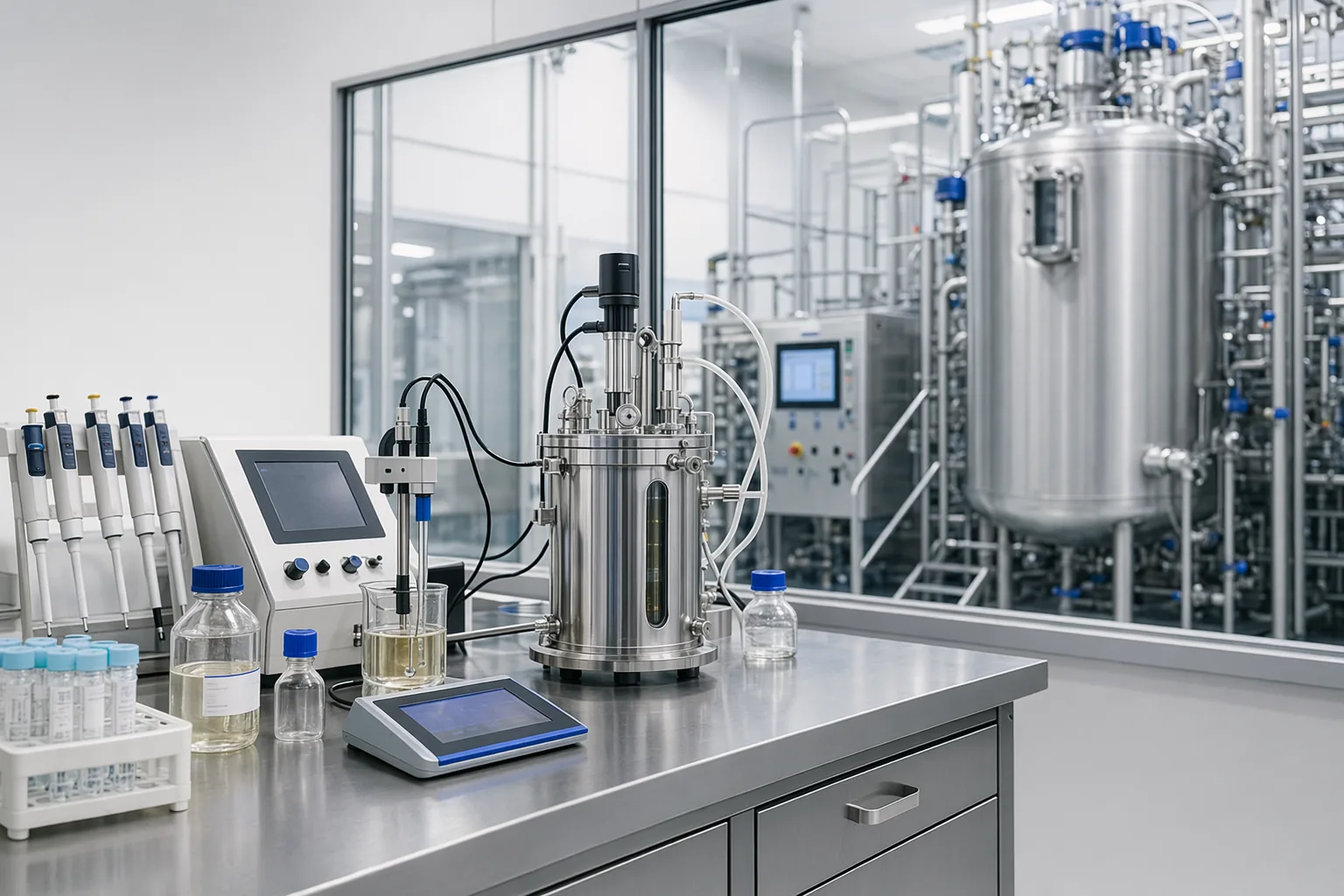
Plan enzyme samples, bench screening, and pilot validation with practical conditions, documentation checks, and B2B sourcing steps for industrial R&D teams.
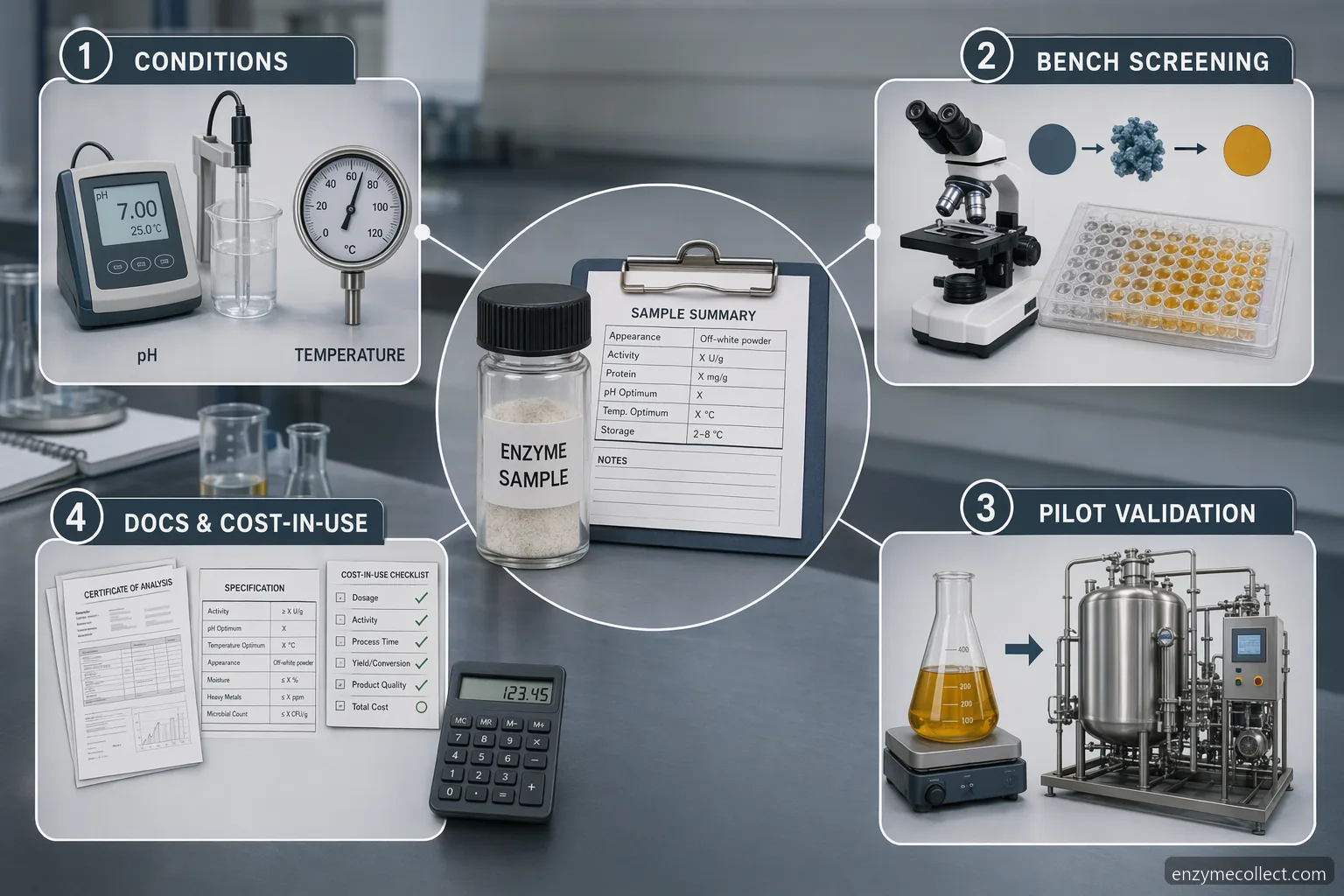
Why Trial Orders Matter for Industrial Enzyme R&D
Industrial enzyme selection is rarely decided from a datasheet alone. Feedstock variability, water chemistry, process time, inhibitors, solids level, and equipment design can change enzyme performance. An industrial enzyme trial order R&D workflow lets buyers evaluate small quantity enzymes before committing to production volumes. For R&D teams, this reduces technical and procurement risk while generating data for process economics. Typical early screening compares enzyme activity, conversion, viscosity reduction, filtration improvement, release of target components, or yield increase under controlled conditions. The goal is not simply to find an active enzyme, but to identify the product that works reliably within your process window and supply chain requirements. A structured enzyme trial order for R&D also helps technical, purchasing, and quality teams align on acceptance criteria before pilot scale.
Useful for R&D, testing, and pilot scale evaluations • Supports side-by-side comparison of enzyme samples • Helps avoid overbuying before process fit is confirmed
Define Test Conditions Before Requesting Samples
A strong enzyme trial order supplier for R&D will ask for process conditions before recommending samples. Share the substrate type, dry solids or concentration, process pH, temperature, reaction time, mixing intensity, and any chemicals already present. Many industrial enzymes are screened within pH 4.0 to 9.0 and 30 to 70°C, but the correct window depends on enzyme class and application. Initial dosage bands may range from 0.01% to 1.0% on substrate weight, or from activity units per gram of substrate, followed by dose response refinement. R&D teams should include a blank control, a heat-inactivated control where appropriate, and duplicate or triplicate runs for promising candidates. Record endpoint values and time-course data so results can be translated into cost-in-use and pilot validation requirements.
Confirm pH range, temperature, time, and substrate loading • Use controls and repeat testing for reliable comparison • Measure both performance and processing side effects
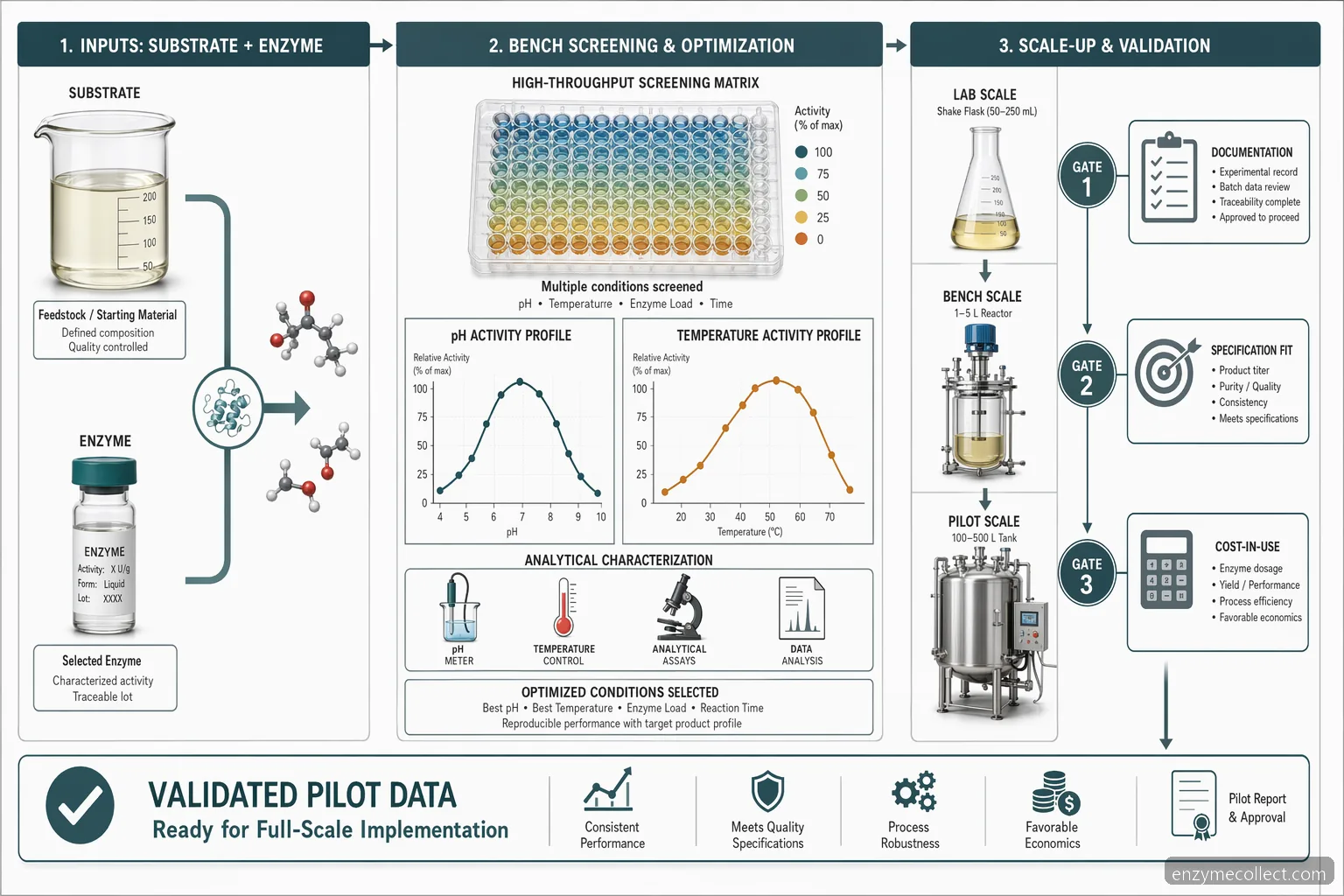
Documentation to Request with Every Enzyme Sample
For B2B enzyme testing, the sample is only part of the purchase decision. Each industrial enzyme trial order testing package should include documentation that supports safe handling, technical evaluation, and quality review. Request a Certificate of Analysis with lot number, activity or potency method, appearance, and release criteria. The Technical Data Sheet should describe recommended application range, dosage guidance, handling notes, and storage conditions. The Safety Data Sheet should be reviewed before lab receipt and use, especially for powdered enzymes or concentrated liquids. Ask whether the sample lot is representative of commercial production and whether future lots will use the same activity assay. This information helps your quality team compare trial results against later procurement lots without assuming equivalence.
COA for lot-specific quality data • TDS for application and storage guidance • SDS for handling and safety review • Lot traceability for repeat testing
From Bench Testing to Pilot Scale Validation
A bench result must be validated under conditions closer to real operation. An industrial enzyme trial order pilot scale plan should preserve the same key ratios used in R&D: enzyme dose per substrate, pH, temperature, contact time, solids loading, and mixing energy where possible. Pilot trials should also test how the enzyme behaves during normal heat-up, hold, transfer, filtration, separation, or downstream inactivation. If the process requires enzyme deactivation, evaluate time and temperature conditions such as 80 to 95°C holds, only when compatible with the substrate and equipment. Track performance across the complete process, not only the reaction step. An enzyme trial order supplier for pilot scale should help estimate sample volume, suggest a dosage ladder, and confirm whether pilot material is available from a scalable lot.
Maintain comparable dose and residence time • Check mixing, heat transfer, and downstream impact • Validate deactivation or carryover control when relevant
Cost-in-Use and Supplier Qualification
The lowest sample price is not always the best industrial enzyme trial order for testing. Buyers should compare cost-in-use based on effective dose, achieved performance, processing time saved, yield gain, energy reduction, waste reduction, or downstream efficiency. Build a simple calculation using enzyme cost per kilogram, required dosage, batch size, and measurable benefit per batch. Then include practical factors such as minimum order quantity, lead time, shelf life, storage temperature, packaging size, technical support, and ability to supply repeat lots. Supplier qualification should avoid unsupported assumptions and rely on documented quality controls, COA consistency, responsive technical communication, and transparent change notification. For R&D teams, the preferred enzyme trial order supplier for testing is the one that supports a clear path from sample screening to pilot validation and future commercial purchasing.
Compare cost per treated substrate, not only unit price • Review MOQ, lead time, packaging, and shelf life • Confirm repeat lot availability and change communication • Include purchasing and quality teams early
Technical Buying Checklist
Buyer Questions
Include the application, substrate, batch size, pH, temperature, reaction time, solids level, target result, and current processing limits. Also state whether you need enzyme samples for R&D, testing, or pilot scale. This helps the supplier recommend suitable enzyme types, sample quantity, dosage bands, and documentation such as COA, TDS, and SDS.
The required quantity depends on assay scale, number of dosage points, repeats, and whether confirmation runs are planned. Many R&D screens can begin with small quantity enzymes, but pilot preparation may require more material. Share your test matrix with the supplier so the industrial enzyme trial order for R&D includes enough sample for reliable comparison.
Use the same substrate, pH, temperature, contact time, mixing, and analytical method for every candidate. Normalize results by active dose or recommended use rate when possible. Compare conversion, yield, processing benefit, side effects, and cost-in-use. Also review COA consistency, TDS guidance, SDS handling requirements, lead time, and repeat lot availability.
Move to pilot scale after bench testing shows a clear dose response, repeatable benefit, and acceptable handling profile. Pilot validation should confirm performance under realistic mixing, heat transfer, residence time, and downstream conditions. An enzyme trial order supplier for pilot scale should help estimate material needs and confirm that the trial lot represents scalable supply.
Request a COA for lot-specific quality data, a TDS for application guidance, and an SDS for safety and handling review. Confirm activity method, storage conditions, expiry or retest date, and whether the lot is representative of commercial material. These documents support supplier qualification and reduce risk when moving from testing to purchasing.
Alpha-Galactosidase for Research & Industry
Need Alpha-Galactosidase for your lab or production process?
ISO 9001 certified · Food-grade & research-grade · Ships to 80+ countries
Frequently Asked Questions
What should I include in an enzyme trial order request?
Include the application, substrate, batch size, pH, temperature, reaction time, solids level, target result, and current processing limits. Also state whether you need enzyme samples for R&D, testing, or pilot scale. This helps the supplier recommend suitable enzyme types, sample quantity, dosage bands, and documentation such as COA, TDS, and SDS.
How much enzyme sample is needed for R&D testing?
The required quantity depends on assay scale, number of dosage points, repeats, and whether confirmation runs are planned. Many R&D screens can begin with small quantity enzymes, but pilot preparation may require more material. Share your test matrix with the supplier so the industrial enzyme trial order for R&D includes enough sample for reliable comparison.
How do I compare enzyme samples from different suppliers?
Use the same substrate, pH, temperature, contact time, mixing, and analytical method for every candidate. Normalize results by active dose or recommended use rate when possible. Compare conversion, yield, processing benefit, side effects, and cost-in-use. Also review COA consistency, TDS guidance, SDS handling requirements, lead time, and repeat lot availability.
When should bench results move to pilot scale?
Move to pilot scale after bench testing shows a clear dose response, repeatable benefit, and acceptable handling profile. Pilot validation should confirm performance under realistic mixing, heat transfer, residence time, and downstream conditions. An enzyme trial order supplier for pilot scale should help estimate material needs and confirm that the trial lot represents scalable supply.
What documents are needed before approving an industrial enzyme sample?
Request a COA for lot-specific quality data, a TDS for application guidance, and an SDS for safety and handling review. Confirm activity method, storage conditions, expiry or retest date, and whether the lot is representative of commercial material. These documents support supplier qualification and reduce risk when moving from testing to purchasing.
Ready to source?
Turn This Guide Into a Supplier Brief Request enzyme samples, COA/TDS/SDS review, and trial-order guidance for your R&D or pilot evaluation.
Contact Us to Contribute