Industrial Enzyme Testing R&D for Formulation Development
Order enzyme samples for R&D, lab testing, and pilot validation with COA, TDS, SDS, dosage guidance, QC checks, and cost-in-use support.
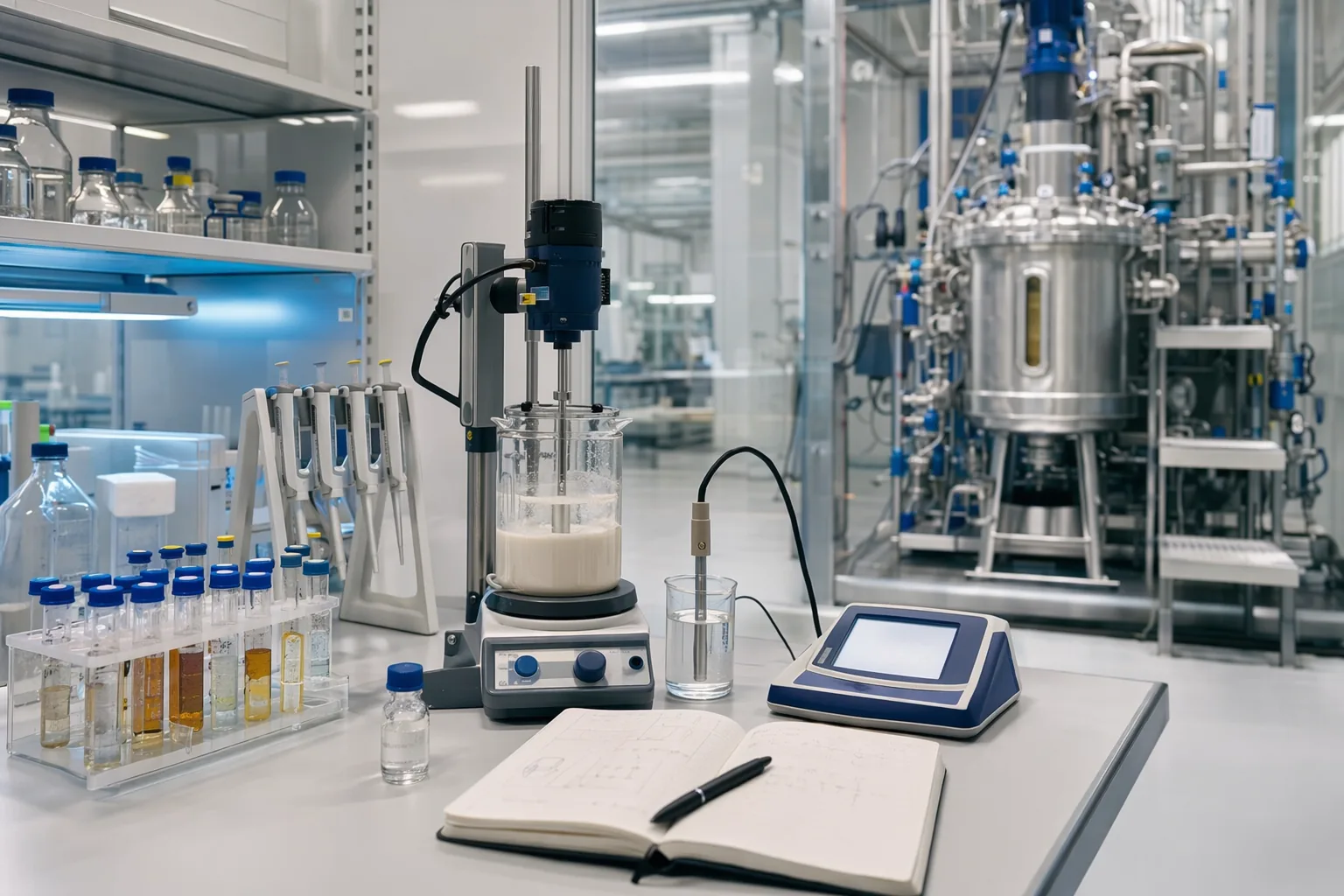
Use EnzymeCollect’s Enzyme Sample & Testing Service to screen small quantity enzymes, compare performance under real process conditions, and prepare confident pilot-scale validation.
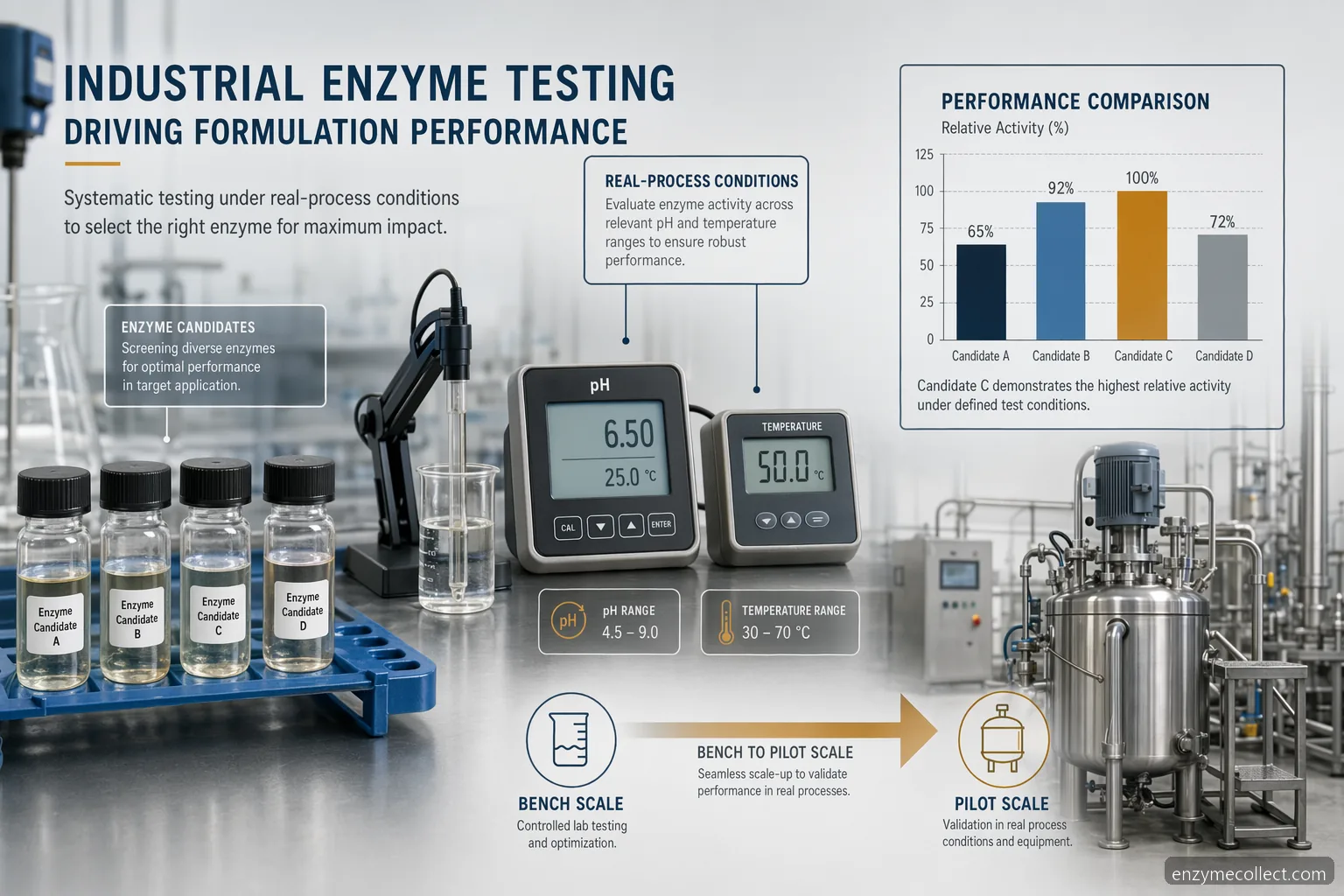
Why industrial enzyme testing R&D starts with samples
Industrial enzyme testing R&D reduces formulation risk before procurement, scale-up, or process conversion. Instead of buying full production quantities, technical teams can run enzyme samples through defined lab protocols and compare conversion, viscosity reduction, cleaning efficiency, hydrolysis rate, or other application-specific outcomes. This approach is especially useful when raw materials vary, process water chemistry changes, or existing formulations need performance improvement without major equipment changes. EnzymeCollect supports small quantity enzymes for testing, R&D, and pilot scale evaluation so buyers can generate evidence before making a commercial decision. Each trial should begin with a clear benchmark, such as current yield, reaction time, dosage, or finished-product specification. From there, a structured industrial enzyme trial order testing program can identify whether an enzyme is technically suitable, economically practical, and compatible with your operating limits.
Best for formulation teams comparing multiple enzyme classes or activity levels. • Useful when production-scale purchasing is premature or material compatibility is unknown. • Supports documented evaluation before supplier approval or reformulation.
Set practical test conditions before the enzyme trial order
A strong test plan defines the actual formulation environment rather than relying only on catalog activity values. Typical screening ranges may include pH 4.0–6.5 for many acidic systems, pH 6.0–8.5 for neutral processes, and pH 8.0–10.5 for alkaline cleaning or processing applications, depending on enzyme type. Temperature screening often starts at 25–60°C for mild liquid systems and may extend to 70°C or higher only when the specific enzyme and process allow it. Initial dosage bands commonly range from 0.01–0.5% by weight in formulations, or from low ppm to several hundred ppm in process water trials. These ranges are starting points, not guarantees. A controlled industrial enzyme trial order R&D protocol should hold substrate, agitation, water quality, contact time, and sampling points constant so that performance differences are meaningful.
Define pH, temperature, contact time, agitation, and substrate load. • Run blanks and non-enzyme controls to separate enzyme effect from background change. • Use replicated samples when results will influence purchasing decisions.
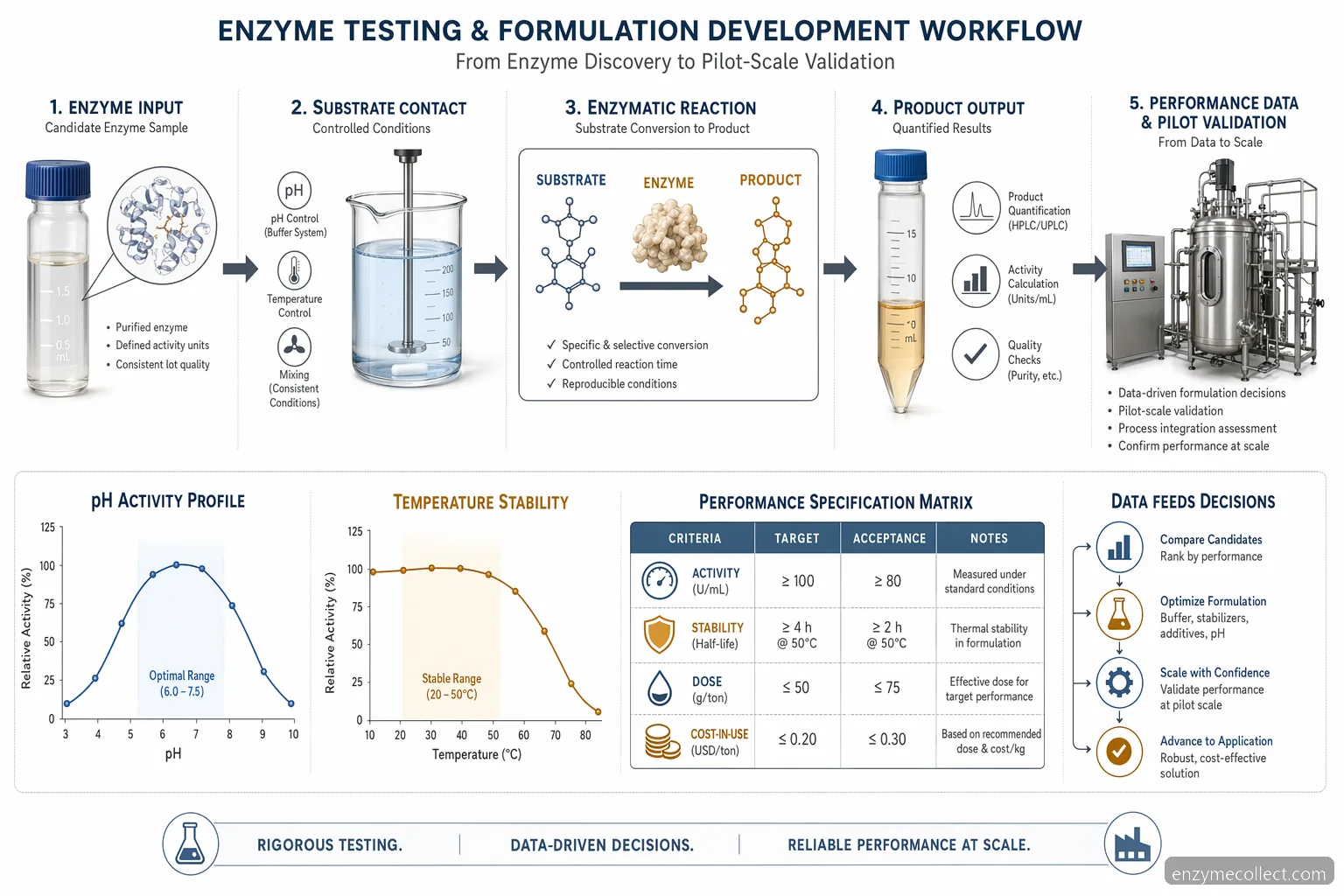
What to request with industrial enzyme samples testing
For industrial enzyme samples testing, procurement and technical teams should request documents that support both lab work and supplier qualification. A certificate of analysis can confirm lot-specific activity or relevant release values. A technical data sheet should describe the enzyme type, recommended use conditions, storage, stability considerations, and general application guidance. A safety data sheet is needed for handling, storage, transport, and internal EHS review. Depending on the project, buyers may also request allergen or raw material statements, packaging details, shelf-life guidance, and country-of-origin information when available. Documentation should be reviewed before the first test, not after a promising result. This prevents delays if a sample performs well but lacks the paperwork needed for a plant trial, vendor onboarding, or internal quality review.
COA for lot-specific quality and release data. • TDS for application range, storage, and technical handling guidance. • SDS for EHS review, PPE planning, and safe lab handling. • Lot, shelf-life, and packaging details for traceability.
Bench testing to pilot scale validation
Bench screening is the first filter, but industrial enzyme testing pilot scale work confirms whether the result survives real mixing, residence time, heating, hold tanks, process interruptions, and downstream compatibility. A pilot plan should use the strongest lab candidates at two or three practical dose levels, such as a low, target, and high dosage. Sampling should capture starting conditions, intermediate conversion, and final quality. QC checks may include pH, viscosity, Brix, moisture, turbidity, residual solids, release of target sugars or peptides, cleaning residue, odor, color, or other formulation-specific markers. If the project involves industrial enzyme trial order pilot scale evaluation, include production operators, quality, procurement, and EHS early. Their feedback helps verify whether the enzyme is not only active, but also manageable, measurable, safe to handle, and compatible with normal operating procedures.
Validate mixing, dosing accuracy, heat exposure, and hold-time sensitivity. • Compare lab results against pilot yield, quality, and processing stability. • Document deviations so successful results can be repeated.
Evaluate cost-in-use and supplier qualification
The lowest sample price is rarely the best selection metric. Enzyme buyers should compare cost-in-use, which links dose rate, activity, yield improvement, waste reduction, time savings, quality gains, and handling requirements. For example, a higher-priced enzyme may be more economical if it reaches the target endpoint at a lower dosage or shorter contact time. Supplier qualification should also consider responsiveness, documentation quality, batch consistency, sample availability, lead time, packaging options, and technical support. Industrial enzyme samples R&D data should be stored in a consistent format so procurement can compare suppliers fairly. Keep results tied to lot numbers, test conditions, and QC methods. This creates a defensible path from sample request to approved vendor, pilot confirmation, and commercial purchasing.
Calculate cost per treated kilogram, batch, or production hour. • Include yield, processing time, waste, and rework in the comparison. • Qualify suppliers using documentation, traceability, consistency, and support.
Avoid confusion with non-industrial testing searches
Some search phrases, such as react unit testing with jest enzyme sample, refer to software testing rather than industrial enzyme formulation work. EnzymeCollect focuses on physical enzyme samples for laboratory evaluation, formulation testing, and pilot-scale validation in industrial applications. The service is intended for B2B buyers, R&D chemists, process engineers, product developers, and procurement teams evaluating enzyme ingredients or processing aids. It is not medical supplement advice and does not replace application-specific safety, regulatory, or quality review by your organization. If your team needs industrial enzyme testing testing support, the most effective starting point is to define the substrate, process conditions, target outcome, required documents, and sample quantity. This helps match the trial order to the right enzyme type and test design.
For B2B formulation, processing, and application testing only. • Not intended for medical, diagnostic, or dietary supplement guidance. • Share process details to improve sample selection and testing relevance.
Technical Buying Checklist
Buyer Questions
The required quantity depends on dosage, batch size, number of conditions, and repeats. For early R&D, request enough material for a blank, a control, at least three dosage levels, and one confirmation run. If pilot validation is planned soon, include that expected volume in the request. Sharing your substrate load, target dose range, and test scale helps determine a practical sample quantity.
For B2B testing, request a COA, TDS, and SDS at minimum. The COA supports lot traceability and quality review. The TDS gives use conditions, storage guidance, and application notes. The SDS supports EHS handling and internal safety review. For supplier qualification, also ask for lot number, shelf-life, packaging information, and any available handling or storage limitations.
Use the same substrate, pH, temperature, mixing, contact time, sampling schedule, and QC methods for both samples. Include a non-enzyme control and test several dose levels rather than only one concentration. Record lot numbers and activity information from the COA. Compare both technical performance and cost-in-use, because a lower dose or faster endpoint can offset a higher purchase price.
Move to pilot scale when the enzyme shows repeatable improvement against your defined benchmark and no obvious incompatibility with the formulation. Pilot work should confirm dosing, mixing, hold time, temperature exposure, cleaning, operator handling, QC reproducibility, and downstream effects. It is also the right stage to involve procurement, quality, and EHS so supplier qualification can proceed alongside technical validation.
No. EnzymeCollect’s Enzyme Sample & Testing Service is positioned for industrial B2B formulation, process development, R&D, testing, and pilot-scale evaluation. It is not medical, diagnostic, therapeutic, or dietary supplement advice. Buyers should use their own regulatory, safety, and quality systems to determine whether any enzyme is suitable for their intended industrial application and market requirements.
Alpha-Galactosidase for Research & Industry
Need Alpha-Galactosidase for your lab or production process?
ISO 9001 certified · Food-grade & research-grade · Ships to 80+ countries
Frequently Asked Questions
How much enzyme sample is needed for formulation testing?
The required quantity depends on dosage, batch size, number of conditions, and repeats. For early R&D, request enough material for a blank, a control, at least three dosage levels, and one confirmation run. If pilot validation is planned soon, include that expected volume in the request. Sharing your substrate load, target dose range, and test scale helps determine a practical sample quantity.
What documents should come with industrial enzyme samples?
For B2B testing, request a COA, TDS, and SDS at minimum. The COA supports lot traceability and quality review. The TDS gives use conditions, storage guidance, and application notes. The SDS supports EHS handling and internal safety review. For supplier qualification, also ask for lot number, shelf-life, packaging information, and any available handling or storage limitations.
How should we compare two enzyme samples fairly?
Use the same substrate, pH, temperature, mixing, contact time, sampling schedule, and QC methods for both samples. Include a non-enzyme control and test several dose levels rather than only one concentration. Record lot numbers and activity information from the COA. Compare both technical performance and cost-in-use, because a lower dose or faster endpoint can offset a higher purchase price.
When should a lab result move to pilot scale?
Move to pilot scale when the enzyme shows repeatable improvement against your defined benchmark and no obvious incompatibility with the formulation. Pilot work should confirm dosing, mixing, hold time, temperature exposure, cleaning, operator handling, QC reproducibility, and downstream effects. It is also the right stage to involve procurement, quality, and EHS so supplier qualification can proceed alongside technical validation.
Is this service for supplements or medical enzyme use?
No. EnzymeCollect’s Enzyme Sample & Testing Service is positioned for industrial B2B formulation, process development, R&D, testing, and pilot-scale evaluation. It is not medical, diagnostic, therapeutic, or dietary supplement advice. Buyers should use their own regulatory, safety, and quality systems to determine whether any enzyme is suitable for their intended industrial application and market requirements.
Ready to source?
Turn This Guide Into a Supplier Brief Request industrial enzyme samples for R&D testing, pilot validation, and supplier qualification.
Contact Us to Contribute